
Fishing Different Sections of the Missouri River
The Missouri River is huge. It carries its massive amount of water through seven U.S states, spanning 2,341 miles across the United States. It is the longest river in North America, beating out the Mississippi River by 1 mile! What are the odds of that? So, when you bring up the Missouri River to those unfamiliar with fly fishing, they imagine a big, slow, muddy river that dumps into the Mississippi. Where we fish the Mo’ this couldn’t be further from the truth. Below Holter Reservoir, one of the most legendary trout tailwaters begins. What is considered world class trout fishing is the first 40 miles below the dam, which we consider our backyard. While this whole stretch of river is chalk full of trout, it has a couple distinct sections that fish differently throughout the year and have their own characteristics that make them separate, unique fishing experiences. On a regular, four-day fishing trip, we will fish every section, making every day a completely different fishing experience.
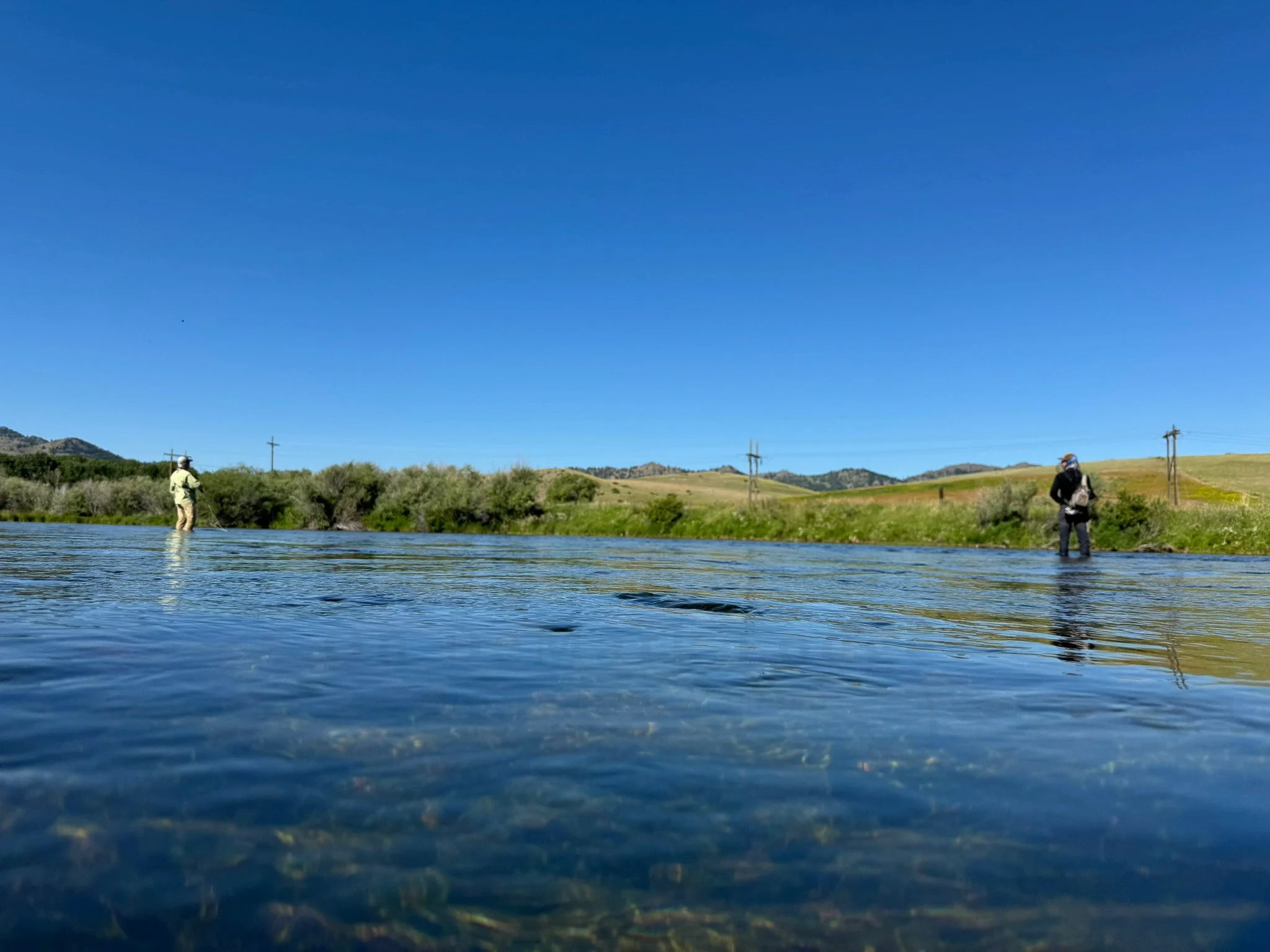
Wading a flat to reach some PMD risers.
The Upper River (Dam to Craig)
Holter Dam is where the magic starts. The Mo’ is unique in the fact that it is tailwater below a chain of three huge reservoirs. This makes the water extremely clean and very cold throughout the entire season. The Upper section is very true to the idea of a tailwater fishery. Big rainbows eating sowbugs, scuds, and midges. These food sources lead to very consistent nymphing all season long. The dam section is the most consistent section year-round with less deviation throughout the year compared to other sections. The upper section is divided into two main floats: Dam to Wolf Creek Bridge and Wolf Creek Bridge to Craig. Dam to Wolf Creek is very distinct with slower water, deeper runs, and very large rainbows. 20 inches becomes the average rainbow in this stretch. The main staple up here is year-round nymphing for high numbers of big, angry fish. This Dam section does not get huge PMD and Baetis hatches due to the deeper water, but it has an amazing Trico hatch that can present some great dry fly opportunities on the right days.
Wolf Creek to Craig is the section that comes to everyone's mind when they think of Missouri. Big, wide, water with massive shallow gravel bars that lead to otherworldly hatches. This section has big rainbows with some trophy browns in the mix. It has consistent nymph fishing, but the real headliner is the dry fly opportunities. Starting in April with Baetis, big fish move into the shallow gravel flats to eat the emerging Baetis when the hatch starts in the early afternoon. These fish stay here and gorge throughout the hatch and start eating dries in this shallow water as well. These fish will get so shallow sometimes that you will see their backs sticking out of the water between rises!
Once we hit June, the PMD hatch starts, and this section really comes alive. This section usually sees the biggest PMD hatch by sheer number of bugs, and the fish take advantage of this. PMDs are a bigger bug, seeing sizes closer to 16 and 14, which makes the fish more aggressive on the surface. Blind casting a PMD dry fly in this section is a staple throughout June. A unique experience to the Mo’ is stopping on a 50-yard-wide gravel bar and picking out which pod of fish to go present your fly to. It’s like saltwater flats fishing for trout. The PMD hatch on the Wolf Creek section is a great opportunity to experience this. The Caddis fishing in this section can be unbelievable in June and July as well. Fish in the shallow riffles are very aggressive to a drifting caddis, so the wide, shallow riffles in this section offer great chances at caddis eaters.
Later summer on this section remains great, with Tricos offering some amazing dry fly opportunities as well. Nymphing is good later in the summer, and this is a staple in this section throughout the year. Fall fishing is much like the spring, with large Baetis hatches bringing fish into the shallows. We see more browns here in the fall as they seem to move upriver as they stage before their spawn. Streamer fishing in this upper river is decent year-round, but not as good as the sections below it.
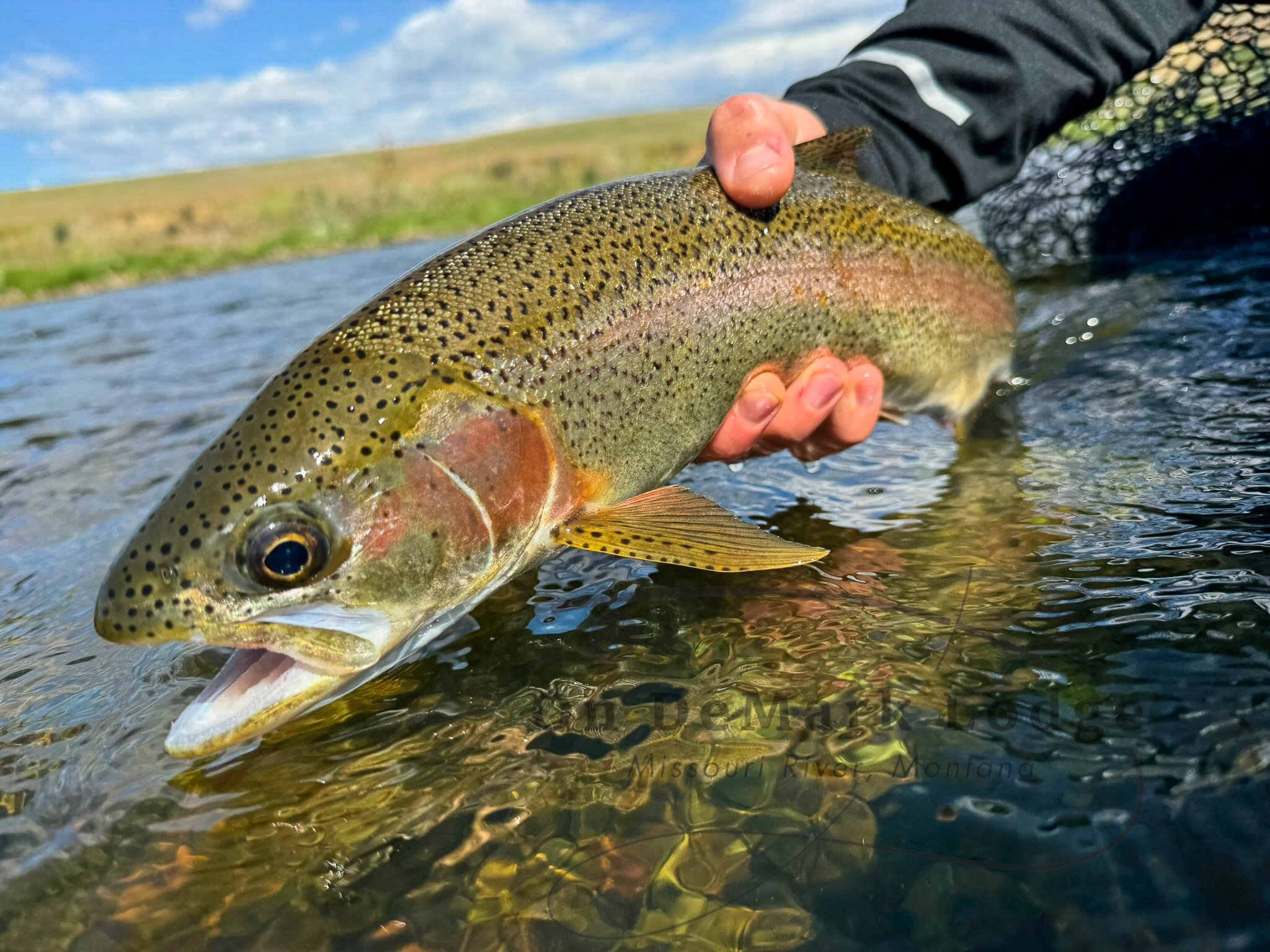
A healthy Mo’ rainbow.
Middle River (Craig to Dearborn River)
Craig. Craiglandia. Trout Heaven. Trout Capital, USA. Fly Fishing Mecca. The Middle River starts right in the town of Caig, the heart of the river. The boat ramp is about 100 feet from three different fly shops and two bars. The essentials of a fly fishing town. In the heat of the season Craig is a party, but only about 40 people live here year round. Launching a boat in town is like arriving at the gate of Disneyland when you're six years old. You drive past three fly shops, and you can almost smell dry fly floatant in the air. Somehow there are more drift boats than human beings in the town, and then you see the river. 100 yards wide flowing lazily into the Craig bridge, you spot a 70 yard wide flat of shallow water. As you scan the flat you see a healthy number of fish rising, and you know it’s going to be a good day.
This section is great nymphing throughout the season, with some very exceptional shallow nymphing opportunities around the main mayfly hatches. We start to see a couple more browns through here, and the average fish is closer to the 17-18 inch mark. They are also a bit easier to fool with a dry fly through here, but only marginally.
The Baetis hatch here is perhaps my favorite on the river. When fish are eating dries, you see them all over the river in this section. There is a stretch of water about 2 miles downstream of Craig that you can see from up on the main road. During a Baetis hatch, from this vantage point, it looks like the river is boiling. Literally hundreds of fish on the surface eating, there is nothing else like it. Spring and fall Baetis in this section you see fish all over the river. Riffles, slow water, back eddies, the middle of the river, there’s fish eating in all of it. This can almost make it difficult to pick where to fish, being there are so many options. This is where we take some time to scan the surface and look for big heads and target these bigger, trophy sized rising fish.
PMDs are way too fun here. Shallow side channels provide exciting dry fly opportunities for big fish on the surface. The nymphing is also top notch when they are focusing on the PMDs. We can get away with bigger hooks which helps hookup and landing ratios on the subsurface. After PMDs, Tricos are super in this stretch. I have lots of days where I put in at Craig, fish dries in the first 100 yards for about 4 hours, then spend the rest of the day pushing out and hitting pods that we see on our way to the takeout. We usually only float about 4 miles of this stretch when Tricos are hatching heavy, because it’s hard to pass up on pods of 20 fish rising, so we spend a lot of time anchored up on these heads.
This stretch is best described as swift, shallow water that turns into big, slow stretches that flow into fast stretches again. Fast, very slow, fast, very slow. These fast sections hold most of the fish, and the slower sections have noticeably fewer. But these slow sections can hold very large trout. These are good spots to throw streamers on the cloudy days, making this stretch one of my favorites for stripping streamers.
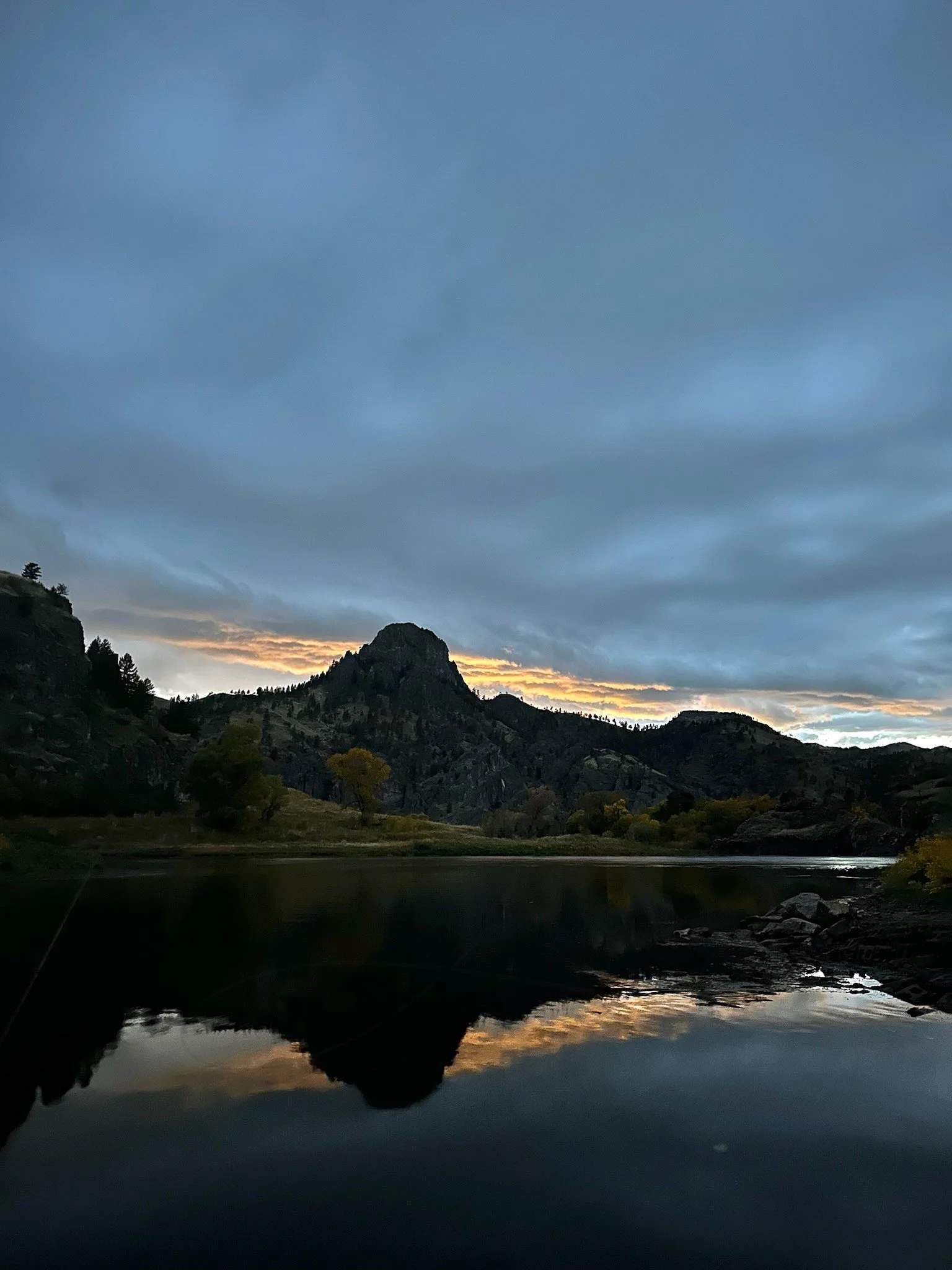
The sun setting over the canyon.
The Canyon (Dearborn River to Prewett Creek)
The Dearborn River flows into the Missouri River about 14 miles downstream from the Dam. This marks a big change in the river as this is where the canyon starts. The river narrows a bit but gains pace, and the scenery change is dramatic. You trade the rolling foothills of the upper river for massive mountains and rock faces that meet the water in spots. The river becomes hard to fish because you can’t put your camera down, there’s so much beauty to take in. This is our backyard as the Lodge sits in the heart of the Canyon, about 4 miles downstream from the confluence with the Dearborn.
The fishing here really revolves around the Brown Trout. We still have lots of rainbows down here, but you start seeing more and more browns. These browns regularly reach the trophy range in size, making them a common target in this section. This is the go to streamer section, stripping big bugs with the hopes of connecting with a 20+ inch fish. The streamer fishing here is great year round; with the best times being Late May-June when the water gets high, in the heat of the summer when crayfish get highly active, and the fall when the browns start putting pounds on.
Nymphing is easy, as the average fish gets closer to the 16 inch range, and they are ready to eat. Deeper nymphing is a staple as the water is deeper and swifter, but shallow is a great option, especially for bigger fish. Dry fly fishing here can be top notch for most of the hatches. The best part of the dry fly fishing down here is the targets. This is a great spot for anglers new to the Mo’ to get a hang of dry fly fishing because the fish are, and I’ll put this bluntly: dumber. Not dumb, but dumber than the upper river fish. I would never disparage my coworkers, but these fish are not the sharpest tools in the river. All the hatches in the river start in the lower river first, so this section is a great spot at the beginning of all the major hatches. Late May PMDs is a good example of when the dry fly fishing is great down here. Earlier Baetis hatches as well.
Hoppers are one of my favorite ways to fish this section. Starting mid-July and going till late September, this section is great for hoppers because browns can’t resist a big meal. Some of the biggest dry fly fish of the season are landed down here on big foam bugs. Long casts, longer drifts, and the occasional twitch gives you a shot at a 2 footer on the surface. Hot, windy days are your best conditions for this type of fishing.
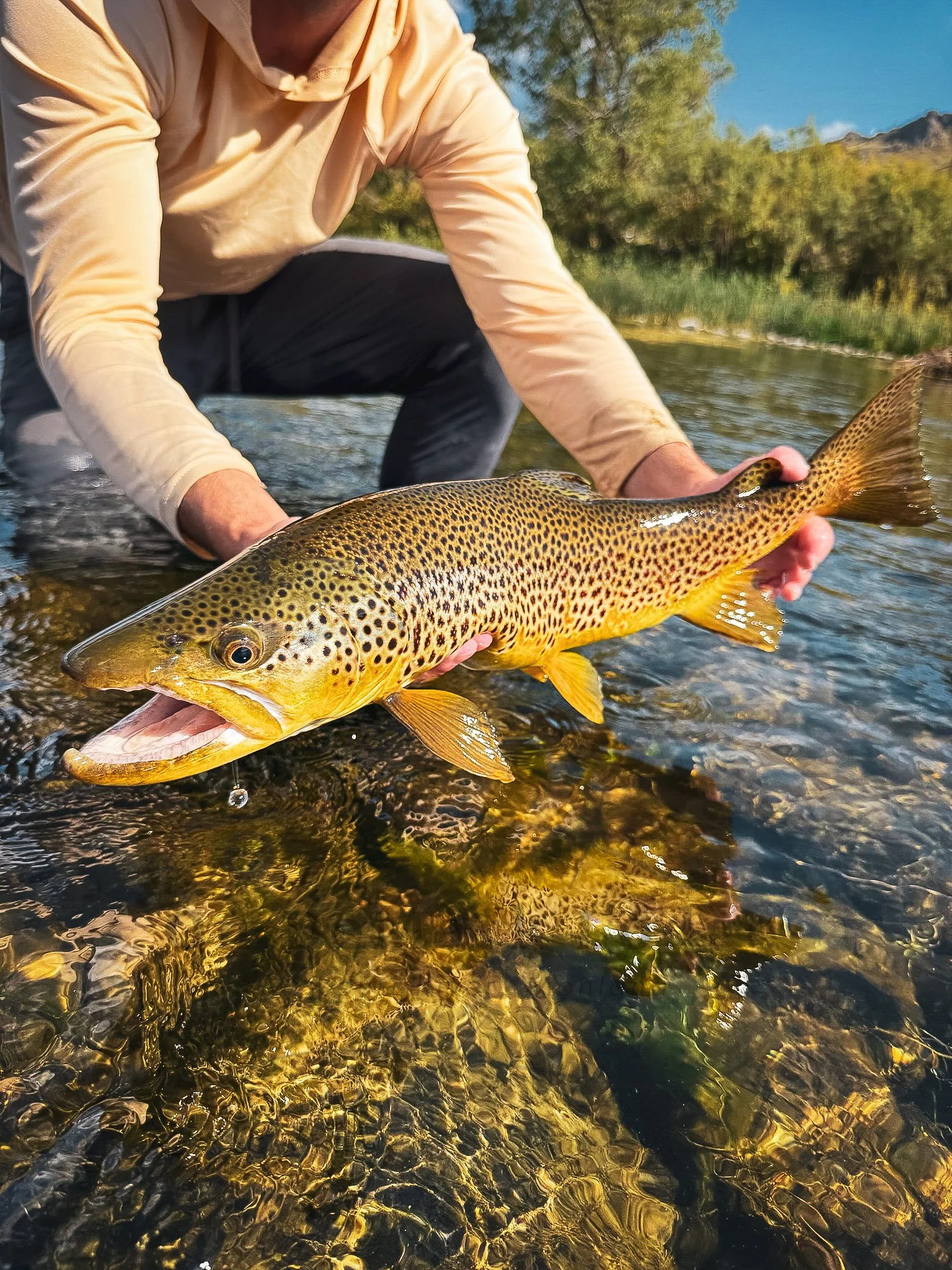
A lower river bruiser.
The Lower River (Prewett Creek to Cascade)
The lower river has my favorite view on the entire river. After the fastest water in the river, the Pine Island Rapids, the river spits you out into a wide section where you notice a change. The mountains that filled your peripheral begin to fade and the scenery turns into endless rolling hills, the beginning of the plains. This is where the prairies of eastern Montana begin as you leave the Rockies, and seeing the transition is inspiring. It brings thoughts of the Lewis and Clark expedition, where this would have been their first introduction to the great western mountain ranges.
Besides the scenery, there are also trout here. Fishing the upper section in the rapids, you can see some aggressive strikes by opportunistic fish treading in heavy water. Streamers can see some big strikes, and nymphing is also consistent. Less dry fly opportunities are available in this swift water, but hopper eats are not out of the question.
After the rapids you enter a ten mile stretch of unique water. The river gets extra wide and slows down considerably. We start to see less numbers of trout, but there are still plenty to be fished for. This section sees hatches starting quite a bit earlier than the upper river, sometimes a week before Wolf Creek sees bugs. I’ve had some of my best Baetis days down here, and my largest fish on a PMD dry last season was here. This section is a quality over quantity thing. There are some absolute studs down here, you just need to be poking around in the right areas.
Which section do we fish the most?
We have about 40 miles of world-class trout water. While they differ a little in approach, all the sections are worth seeing. I’d say in any given season, we fish the upper river slightly more than the other sections, and fish the lower river the least. The Middle River and Canyon are fished about equally, but depending on the conditions, we might lean towards one section a little more. While there are four main sections, there's about 16 different floats we do in these sections, so no two trips are the exact same. While some trips we will hit the dam multiple times, other trips we’ll spend a couple days in the canyon if the browns are really fired up. We’re always adjusting floats and spend way too much time picking the perfect stretch for any given day.
While the Missouri river is one of the most consistent fisheries in Montana, it is not immune to weather. As we all know with fishing, especially fly fishing, conditions are not always perfect. High winds, nasty weather, extreme pressure changes. These things are out of our control and can make it harder to be very successful on the water. One thing that helps combat the unexpected and uninvited is more days of fishing to get a greater chance of the right conditions.
So how many days should you fish to experience it all? 2 days of fishing is not enough, and if weather doesn’t cooperate, it’s hard to ensure a proper Missouri River experience. We don’t run these trips very often. 3 days of fishing trips give you enough time to get a taste of most of the river, but you won’t see quite all of it. This is still a decent amount of time to get a good feel for the river and have a great experience. 4 days is a great span. You see most of the river, usually get at least a couple days of good conditions, and get to fish in a variety of approaches. 5 day trips are also a great way to stay. Arrive on Sunday, fish Monday through Friday when the river is the least busy and depart on Saturday. This ensures seeing the whole river and trying all techniques. It also gives you the best opportunity to learn the river in depth and really get a next level understanding of the dry fly fishing techniques when the conditions are right.
Whether you fish 3 days or 5 days, fishing the Mo’ multiple days is a must for a fly angler. Seeing the whole river and getting a different stretch of water daily makes every day unique and memorable. One of the best parts of every trip is asking people what their favorite stretch was. I’ve heard every section of the river, and I think that it is a pretty neat indication of how special this fishery is. So, while the whole river is worth seeing, I’m sure you have a favorite stretch if you fished it. And if you haven’t, let's get you down here so you can pick yours.
Cheers,
Warren DeMark