
Targeting Trophy Brown Trout on the Missouri River
Trophy Brown Trout live in the minds of anglers year round. The colors, the extra-large fins, the elongated jaws forming that iconic kype. While the Mo’ is talked about for its massive Rainbow Trout population, we also are blessed with a great fishery for finding trophy sized Browns. I consider any Brown over 20 inches a trophy, as that would be most anglers personal bests, but we see plenty of 22 inch fish, a fair amount of 2 footers, and the occasional 26+ inch fish. Targeting the fish in this size bracket is difficult, but well worth the effort.
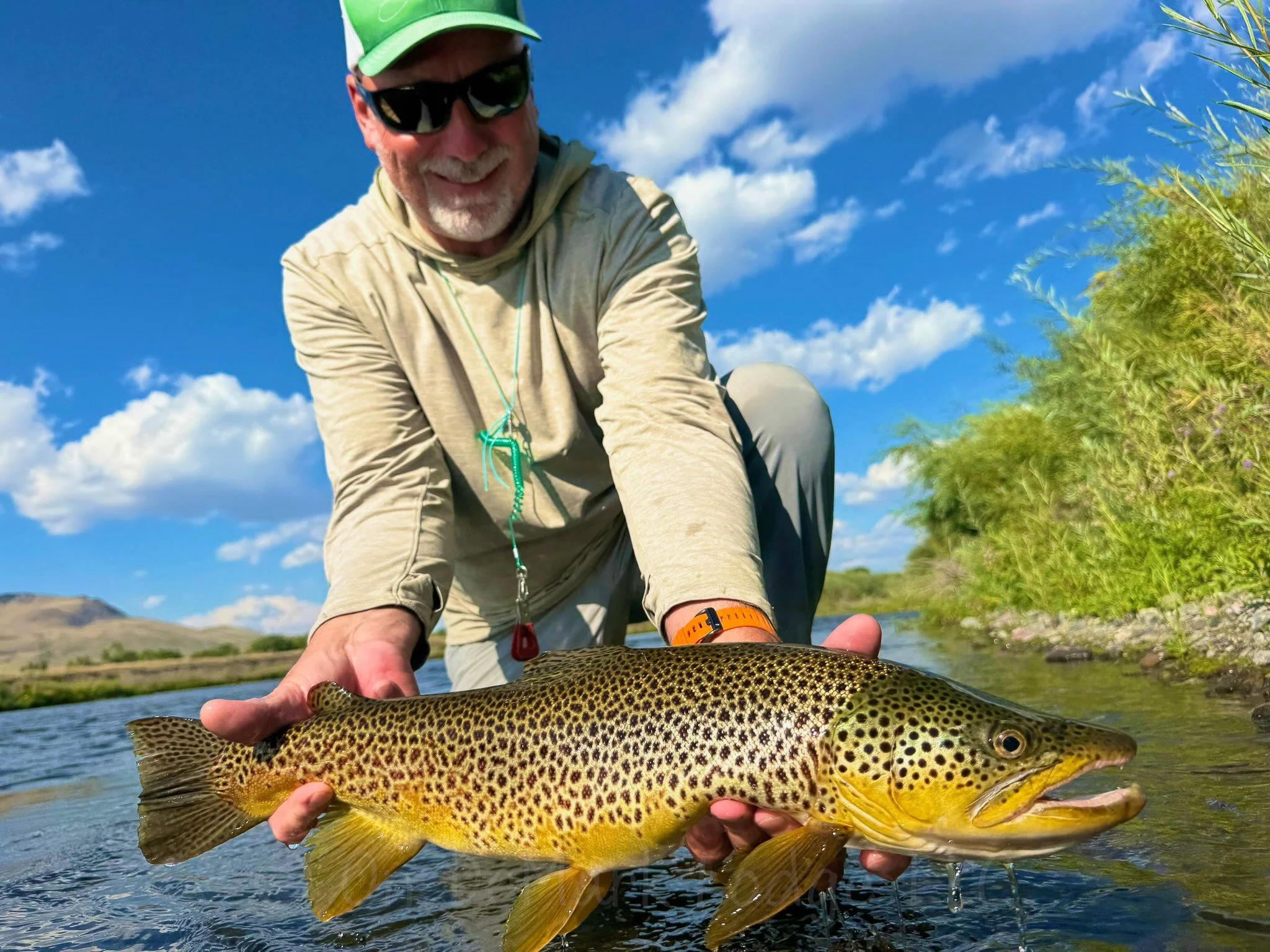
Summer Brown
Brown trout in general behave differently than rainbows, but the larger fish behave much differently than the average rainbow. These behavioral differences are key when trying to target the wall hangers. The most obvious difference is the food source. Bigger fish eat bigger meals; some of our main examples are dead fish, smaller trout, whitefish, crayfish, leeches, grasshoppers, and mice. These big protein sources make big fish, so imitating these foods can help when hunting larger trout. The big boys will still eat smaller flies too, especially during a classic Missouri mayfly hatch, you just need to deal with catching some normal sized fish as well when mimicking smaller food sources.
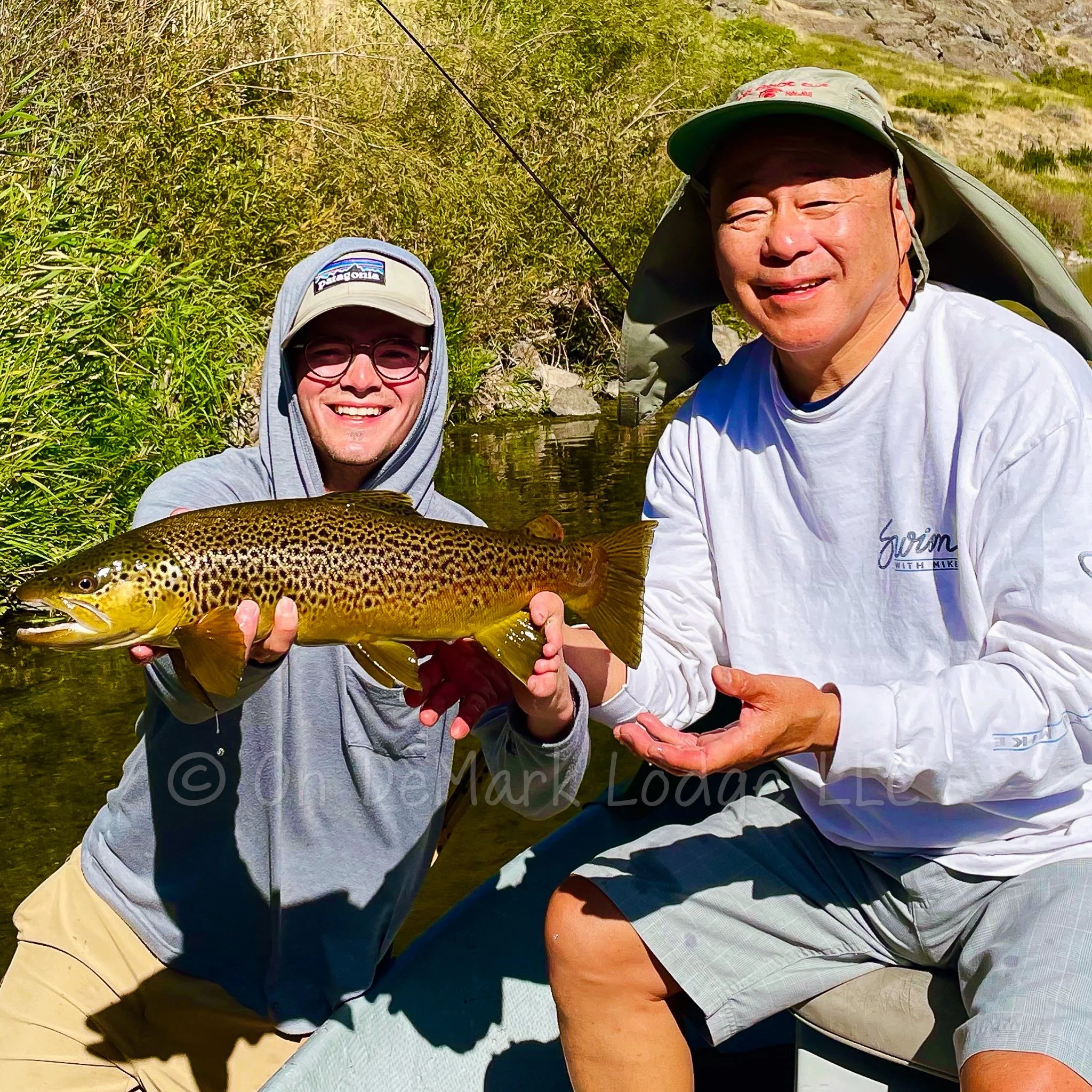
Warren and Wayne with a Healthy Fish
Browns also like overhead cover, and big ones need it. To get over 24 inches, these fish need to become ambush predators. This means hiding in cover, and blitzing prey unexpectedly. The Mo’ doesn’t hold tons of obvious cover, but there are lots of little nooks for these fish to hold in. Undercut banks, below trees, boulder banks, bridges, and cliff faces are some examples. Another example of overhead cover that is overlooked on the Mo’ is weed beds. Giants make their living patrolling the taller weed beds and eating unsuspecting fish also using the weeds for cover. You can find these fish right in the middle of the river.
Searching for Browns on Streamers: Warren DeMark
When it comes to fishing style, streamers are the first go to approach for targeting big fish. Bigger meal = Bigger fish. It’s not exactly rocket science. The streamers we throw and how we throw them differs greatly depending on the season. The time of year everyone thinks of for big Browns is the fall, so we’ll start there.
Fall. Large Flies
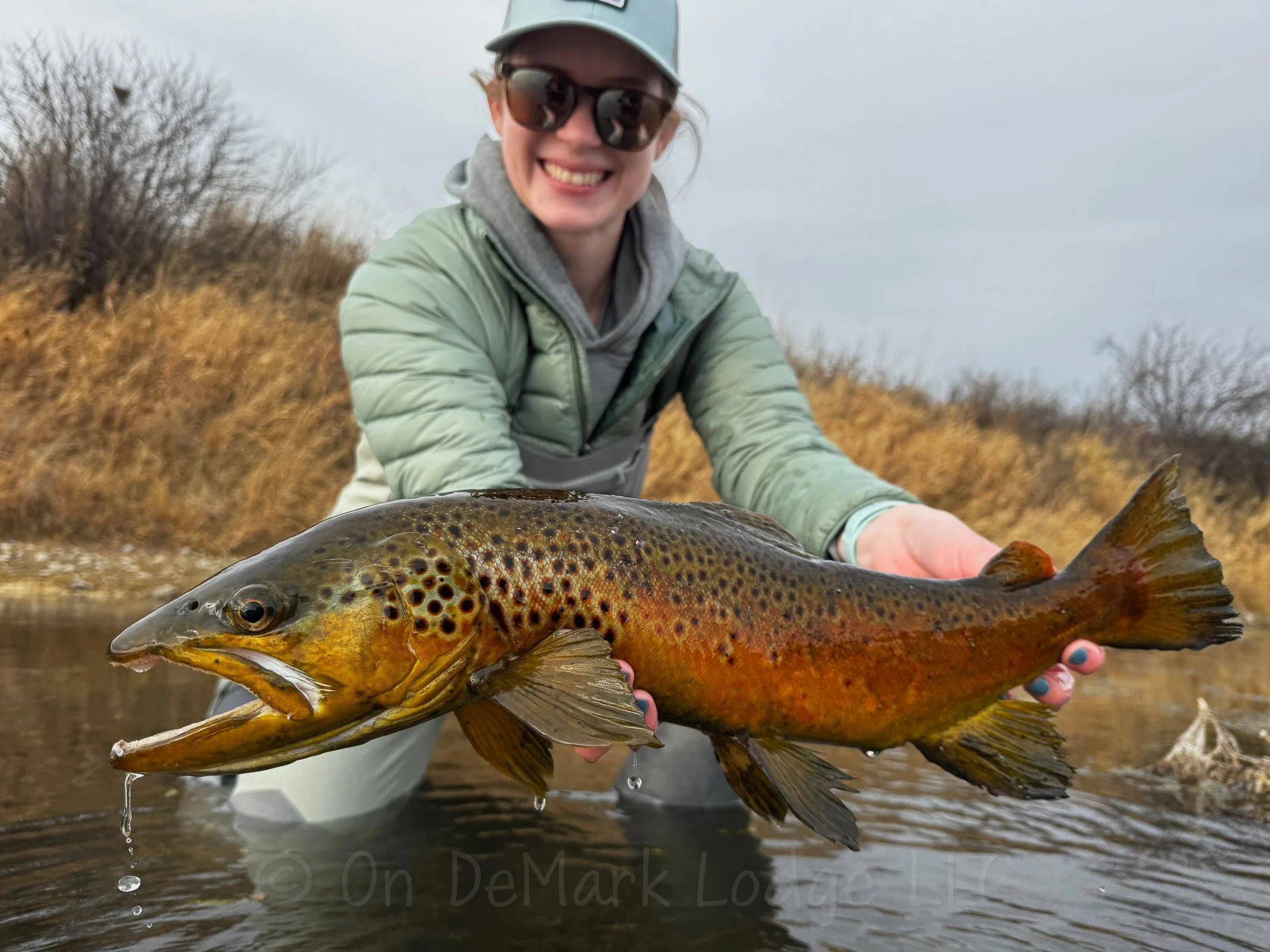
Fall Stud
In October, the Browns are pre-spawn. They put on some weight, they bloom into beautiful colors, and they start getting more and more aggressive. The best approach for these fish is bigger patterns. Think articulated patterns, longer tails on classic patterns, and bigger hook sizes. We go bigger because the big fish will eat it, and it can shy away some of the smaller fish (16 inch rainbows). I default to throwing single hook patterns that have a longer hook shank, but everyone has their favorites. Fall streamer fishing is about perseverance. Pounding run after run, searching for the right fish. I use a decently fast retrieve for these fish, as I’m trying to evoke a reactionary bite. With our bigger fish, something you see often is a slow follow. I have seen way too many 24-30 inch fish hover under a streamer, get their nose to it, and disappear. A fast retrieve combats this; fish that speed up to a fly will eat more often than a fish who can mosey up to a fly and decipher what it’s looking at.
Late Spring: Bank Shots
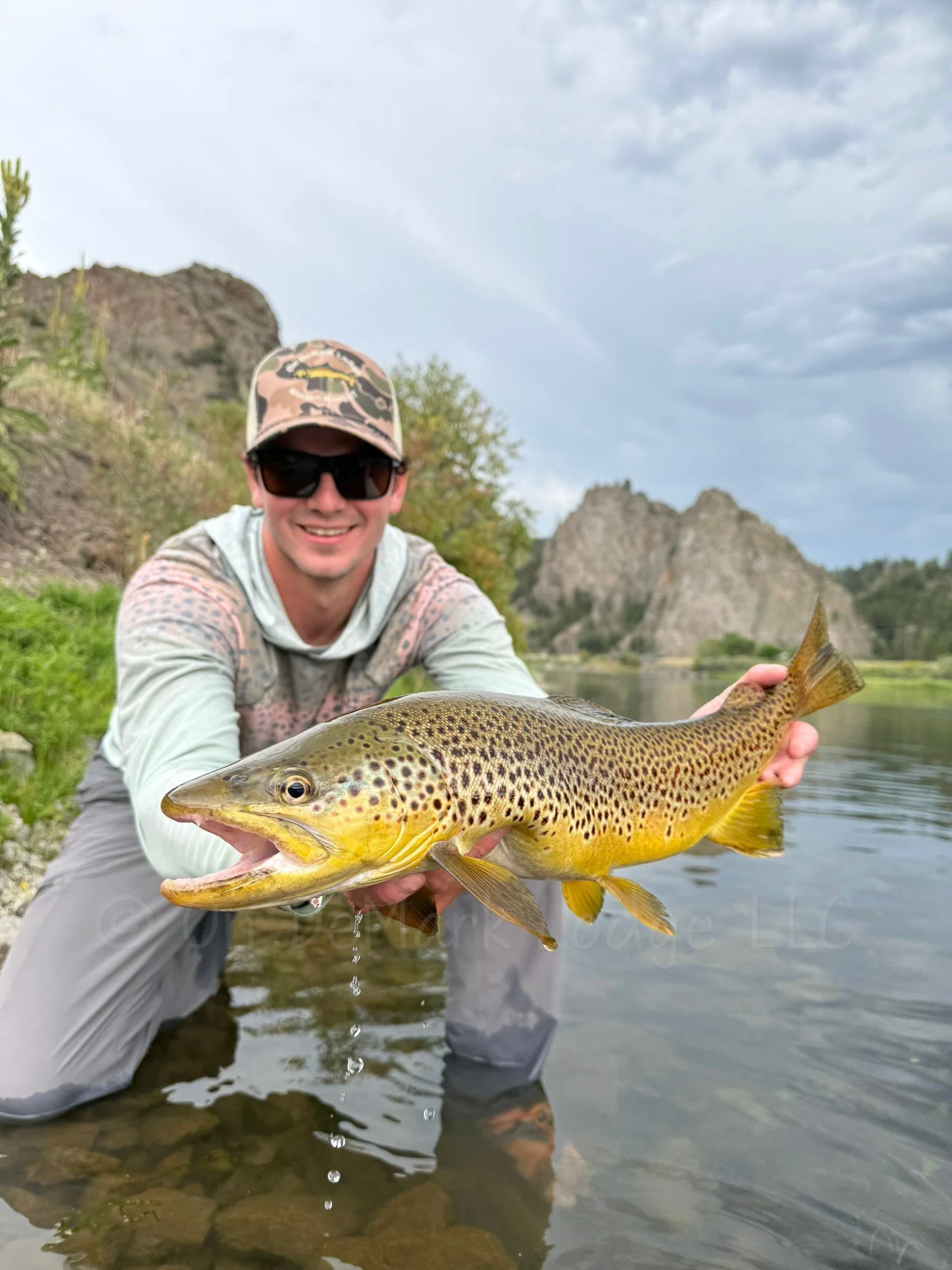
Chunky Mo’ Brown
Another time of the year for great streamer fishing is the tail end of May into the beginning of June. This time of year, we get elevated water levels from headwater runoff, so we get deeper water into the banks than usual. This opens up new real estate for lunkers looking for some overhead cover. These new holding areas, combined with higher flows pushing around smaller fish and crayfish, results in some dynamite streamer conditions. We use heavier streamers this time of year, coneheads and dumbbell eyes. We’re trying to get shots basically touching the bank and get a good couple of strips moving upstream to coax out the big ones. This is a time an intermediate line can be used successfully. The eats are electric; the fish just appear from the abyss of the bank and engulf your fly. It is a very visual game.
Summer: Fast Retrieves
Late summer can hold some incredible streamer fishing with proper weather. Any type of overcast or low light conditions gets the bigger fish fired up, and this a necessity this time of year. If you get these types of conditions, it can be lights out. The fish really key in on crayfish this time of year, so we throw lots of top heavy bugs that get a jig action on the retrieve. We also throw all over the river this time of year, middle river, shallow riffles, banks, the whole river holds fish looking for a big meal. Really fast retrieves, trying to make the fly bounce and run like a fleeing crayfish, are essential for sticking a big one. The fish can be hyper aggressive when everything lines up, and you see some amazing eats in our gin-clear water. This is probably my favorite style of targeting Browns on big bugs.
Targeting Trophy Browns With Dry Flies: Craig DeMark
Since the Missouri is known for its hatches and dry fly fishing, trophy browns on dry flies are a constant possibility. They do require different tactics than the average Missouri rising fish. Part of the equation to success has to do with tactics, flies, and locations, but a good portion is in observation. Here’s a short run down of times and hatches.
Pale Morning Dun time. Late May through early July.
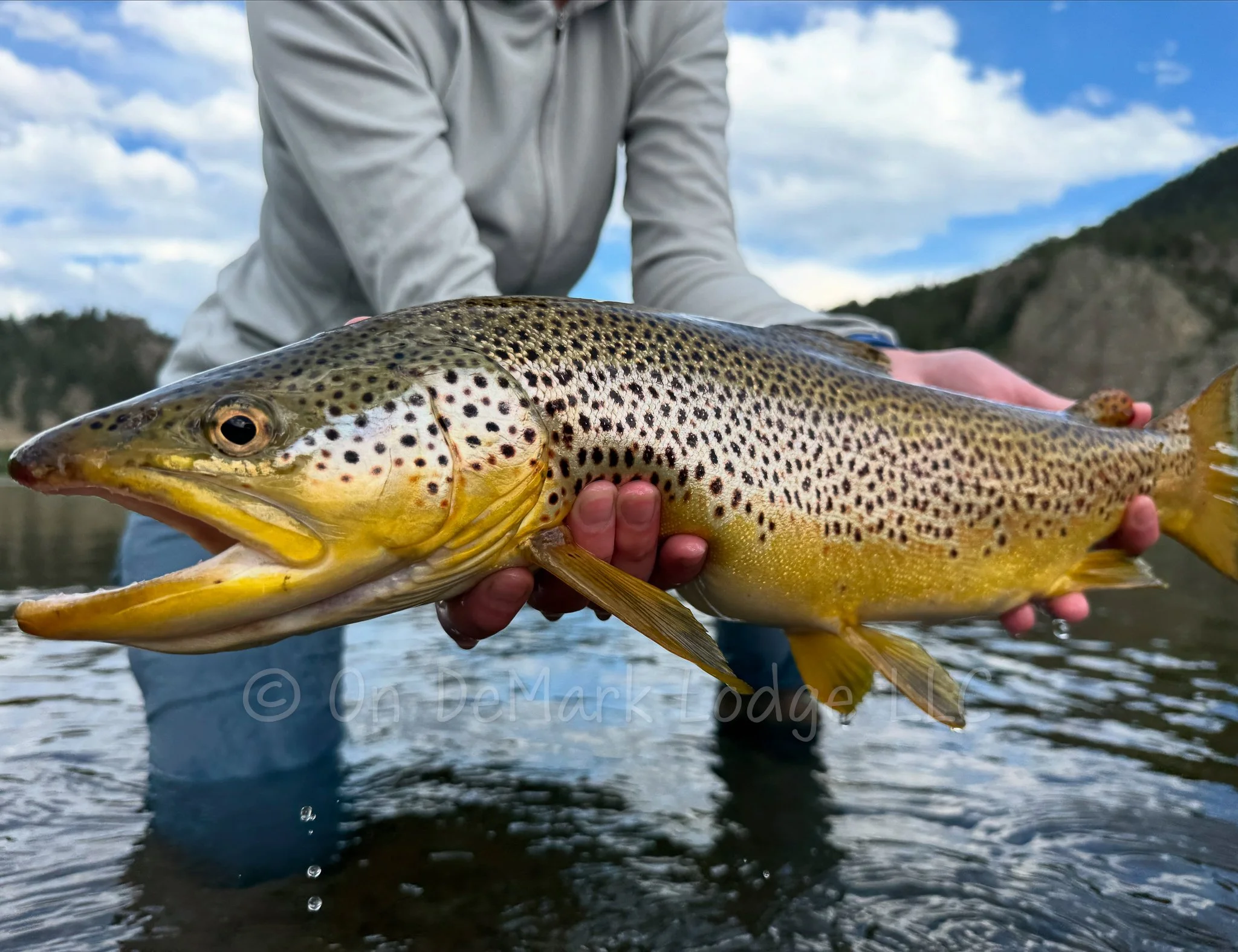
June PMD Eater
While the spring Baetis hatch gives us some big browns on surface flies, we really start targeting them during PMDs. The PMDs are a bigger mayfly that brings up larger fish.
This is the first hatch where we start hunting heads. If you’re not familiar, head hunting is scanning the river for rising fish that appear to be significantly larger than the other rising fish. Be warned, IT IS ADDICTIVE.
This is where the observation part of the equation comes into play. We’re looking in those places that the big browns like to feed. It takes some self-control to not cast to the pods of 18 inch rainbows while you’re scanning the river. The big fish like to eat alone. Look for those individual fish feeding close to a bank, super shallow riffles, or dead water deep pools. The tell-tale sign of the browns is a nose that resembles an alligator and a pillow white inside of the mouth when they eat.
Once you find that trophy, your talent takes over. Downstream presentation. It’s going to be a long cast, with minimal (think one) false casts. The reach cast is your best friend. Land it softly 3-4 feet above that snout. You are probably going to have to feed it line as you watch it slowly approaching that sipper. Breathe slowly and count to 3 as you watch the mouth open and let the fly enter. Now lift and let that hook set itself. If you’re in a boat, be ready to pull anchor and chase. If you’re wade fishing, get ready to run. That alligator is going to test your knots on that 5x tippet real fast.
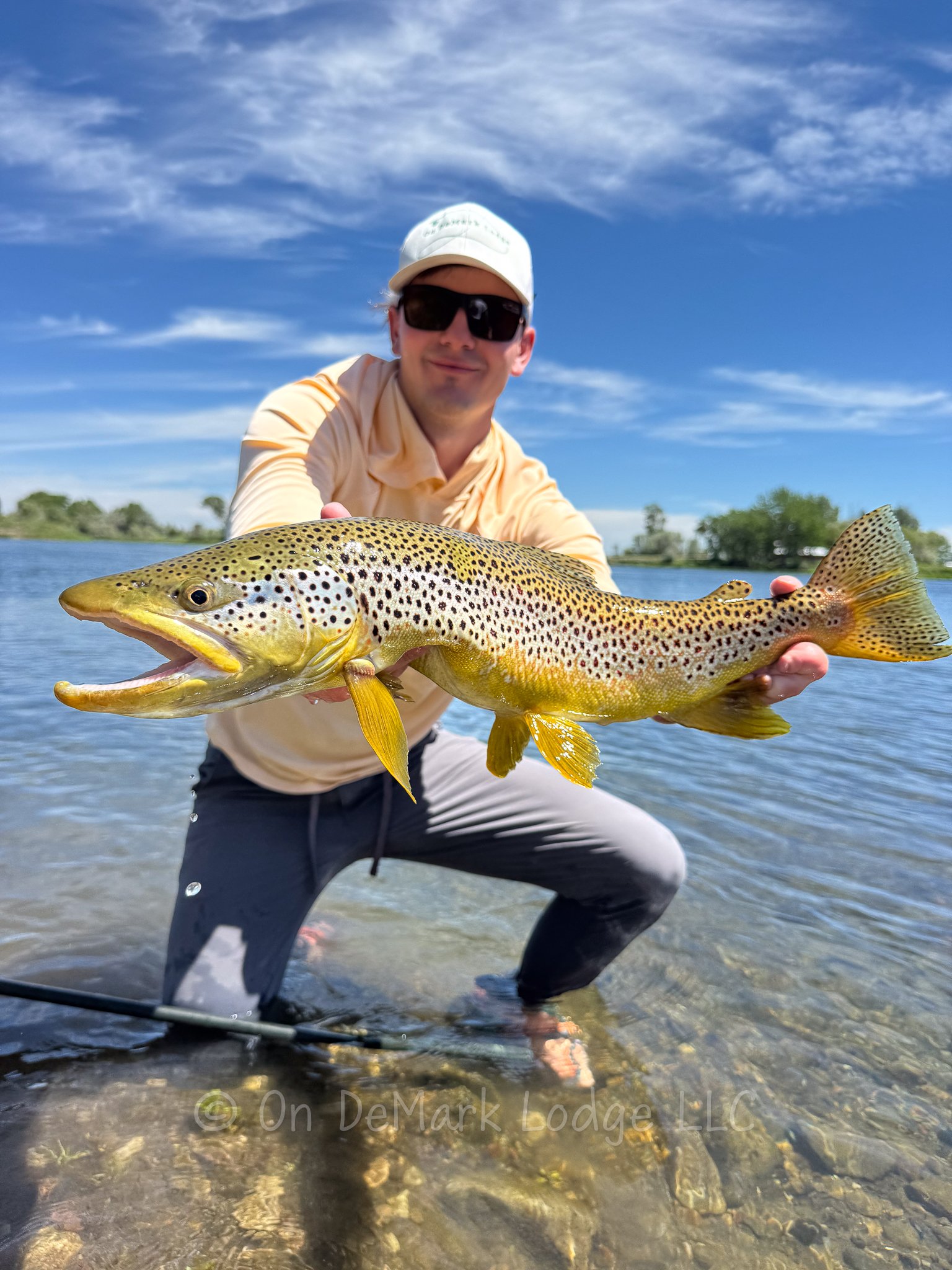
Late May PMD Sipper
These fish are also selective in the stage of Pale Morning Dun that they eat. A lot can be told by sitting and watching what that fish is doing. Pay attention to the bugs that are heading into the fish’s lane. The duns are easy to pick out. They look like miniature sail boats with their 2 upright wings glistening in the sun. If you see the insect without upright wings, it’s probably a spinner or cripple. I like dun imitations with long, or bright colored wings that I can see. Rusty spinner patterns are always a good choice for the spinner stage. For cripples, the fallen overlook, that floats well in the film.
Trico hatch. Early July through late August
What Trico mayflies lack in size of individual bug, they more than make up for in sheer volume of the food supply on the river’s surface. This gives the big fish a reason to show themselves on the surface again. The morning spinner fall starts after the mating flight you see in the early morning sun along the riverbank.
You’re again looking for the individual fish that are by themselves feeding in similar water to PMD time. All the fish are eating spinners, so you don’t have to spend time deciding what stage they are keyed on. But you still want to take your time observing that big brown. Watch that timing and rhythm at which it feeds. You have to time that fly to be in the feeding lane exactly when the fish is eating. We use Trico spinner patterns that have high visibility characteristics in size 18 and 20s.
Grasshoppers! Late July through early October.
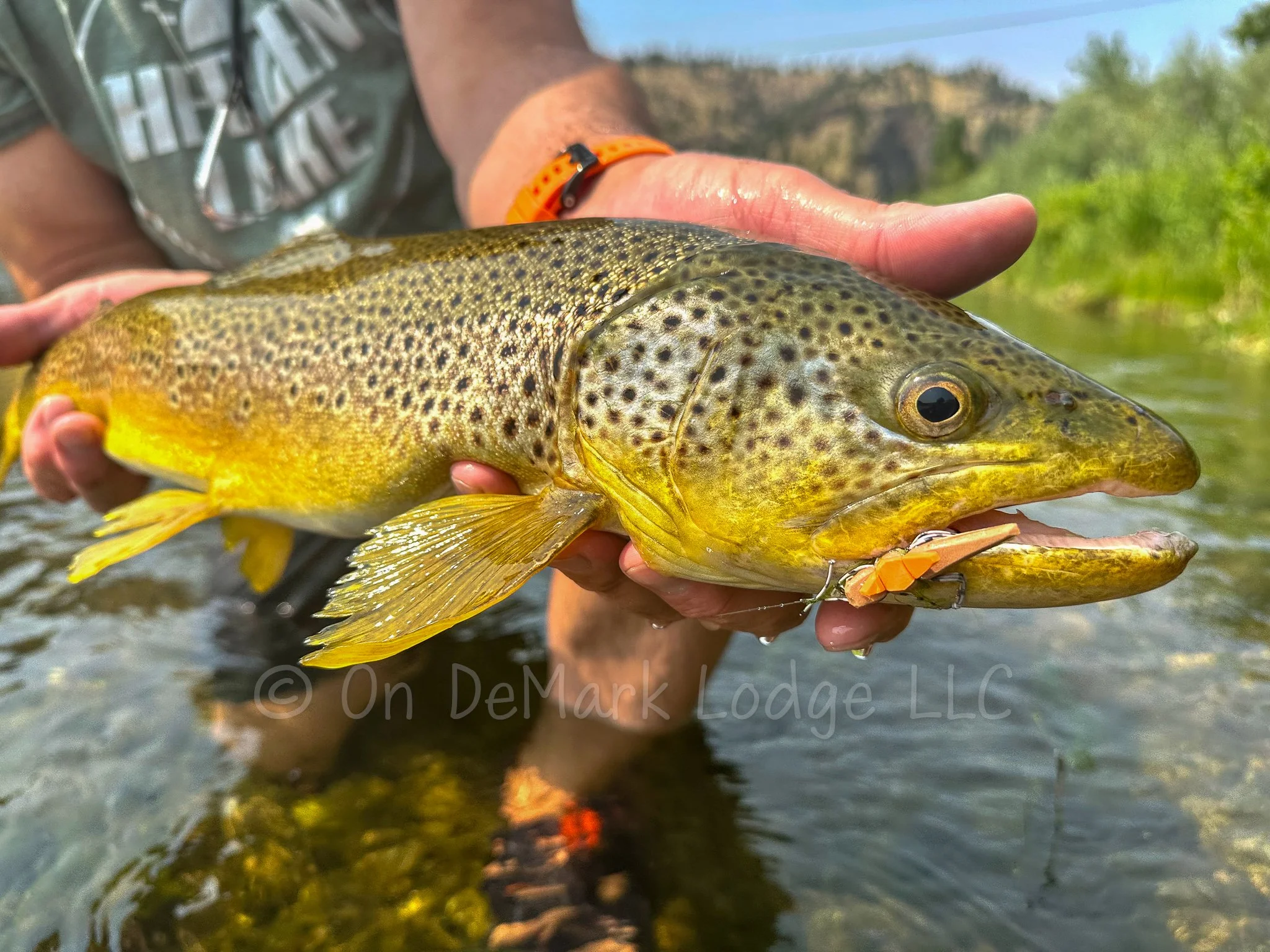
August Hopper Stopper
The fields and grasslands around the Missouri have a very healthy population of hoppers and trophy brown trout love to eat them. Warm, sunny, and windy are the right combination to get the fish keyed in on these large insects. Even though you can’t target specific fish, we get many of our biggest browns of the season on hopper patterns.
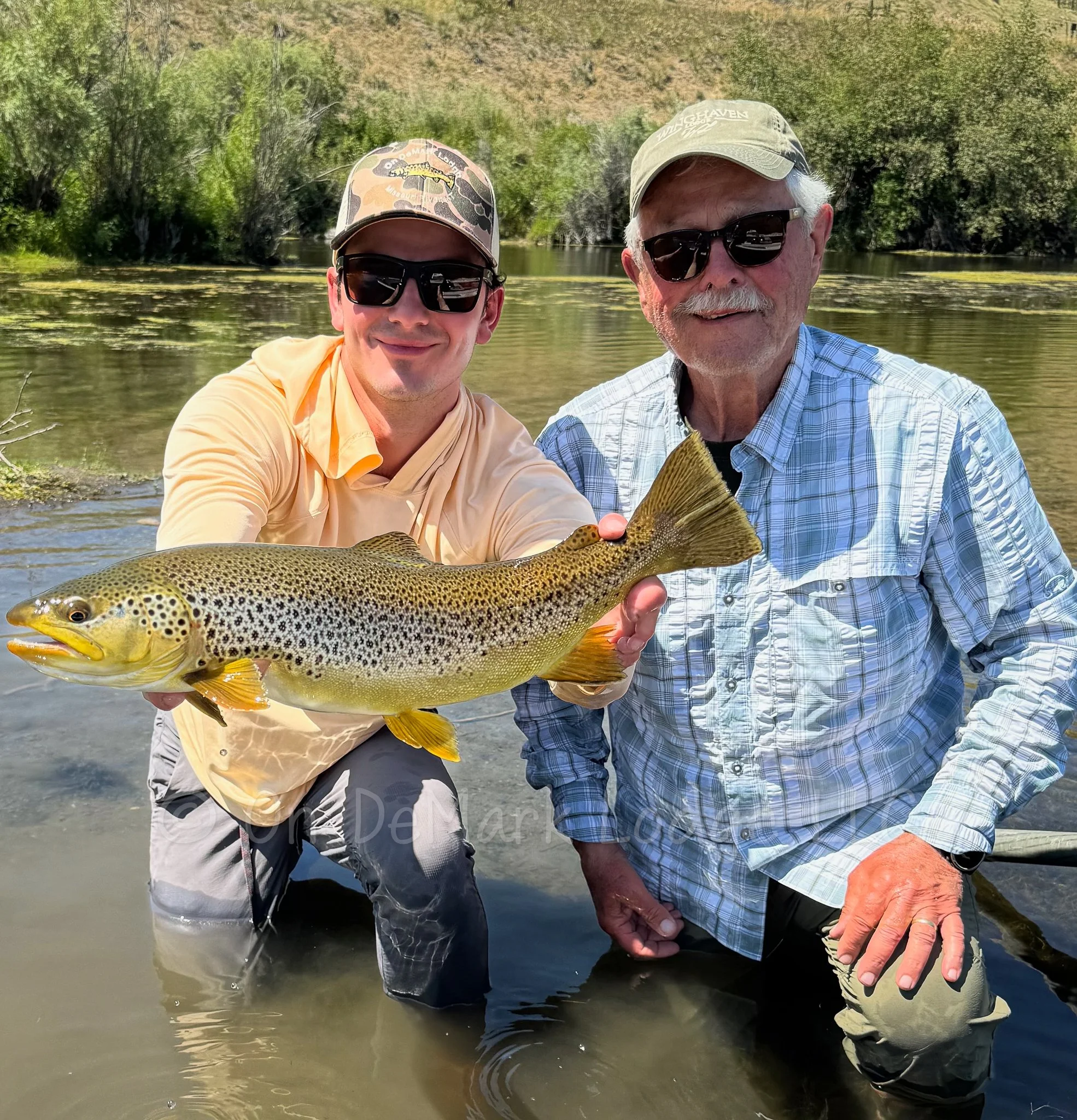
A Hefty Hopper Eater in Late July
The key is location. Long drifts on shallow gravel flats provide the best results. Sometimes they like them dead drifted. Sometimes they like them with a little kick. If you see a fish follow under your dead drifted presentation without eating it, give a couple little strips. That will often entice a hair raising explosion.
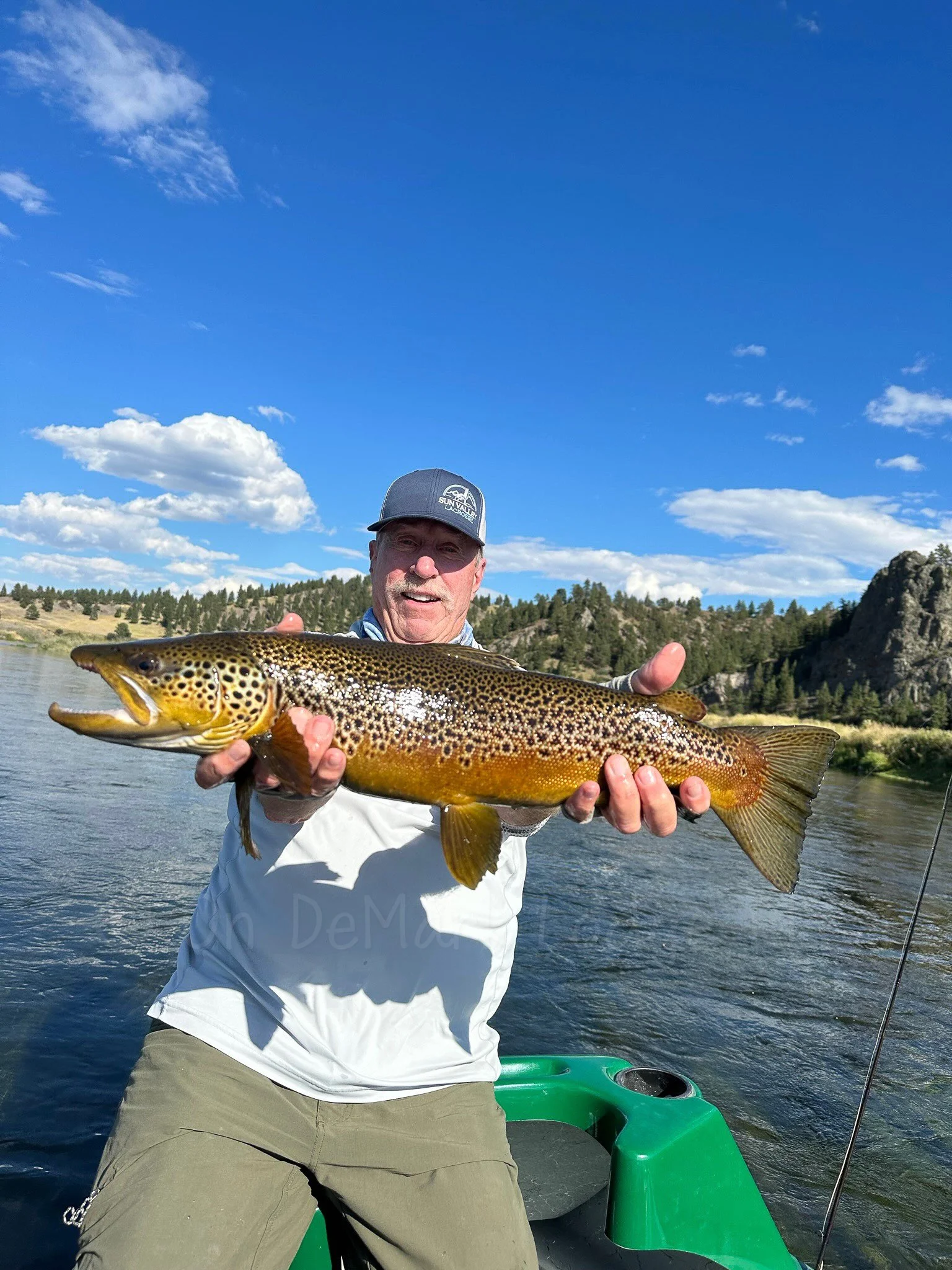
A Behemoth in September
We fish mostly the Moorish Hopper in sizes 10-6. Long leaders with 3x and 4x tippets. I love August days when you head hunt Trico sippers in the morning followed by hopper fishing in the afternoon.
Searching for Big Ones on Nymphs: Warren DeMark
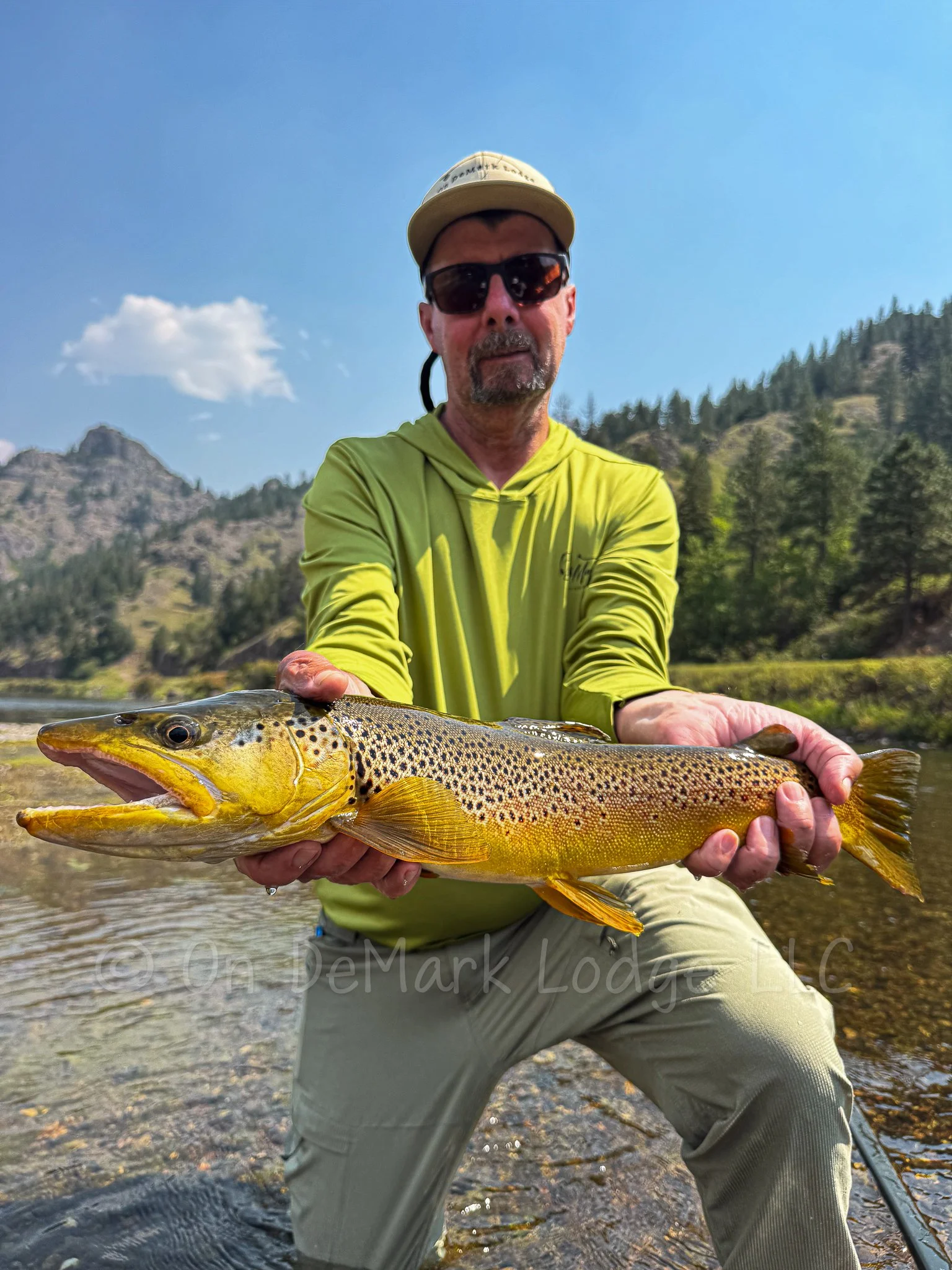
As for nymphing, we land some studs under a bobber every year. It’s not as sexy as a streamer eat, or a kype jaw slurping a dun, but it can be highly effective. Springtime is great for this. When we see our first Blue-Winged hatches, the bigger fish get really shallow and gorge themselves on the first buffets of the season. Shallow nymphing weightless mayfly patterns can put some serious fish in the net. Shallower nymph rigs are common for getting bigger fish. Some people conflate deeper water with bigger fish, but that’s not usually the case here. Trout do most of their eating in 3 feet or less of water, as that’s where the food concentrates, especially on the Mo’ with our shallower river structure. The biggest exception to this is in the winter and early spring season, when fish concentrate on the very bottom of deep slow runs, as that’s where the warmer water lays.
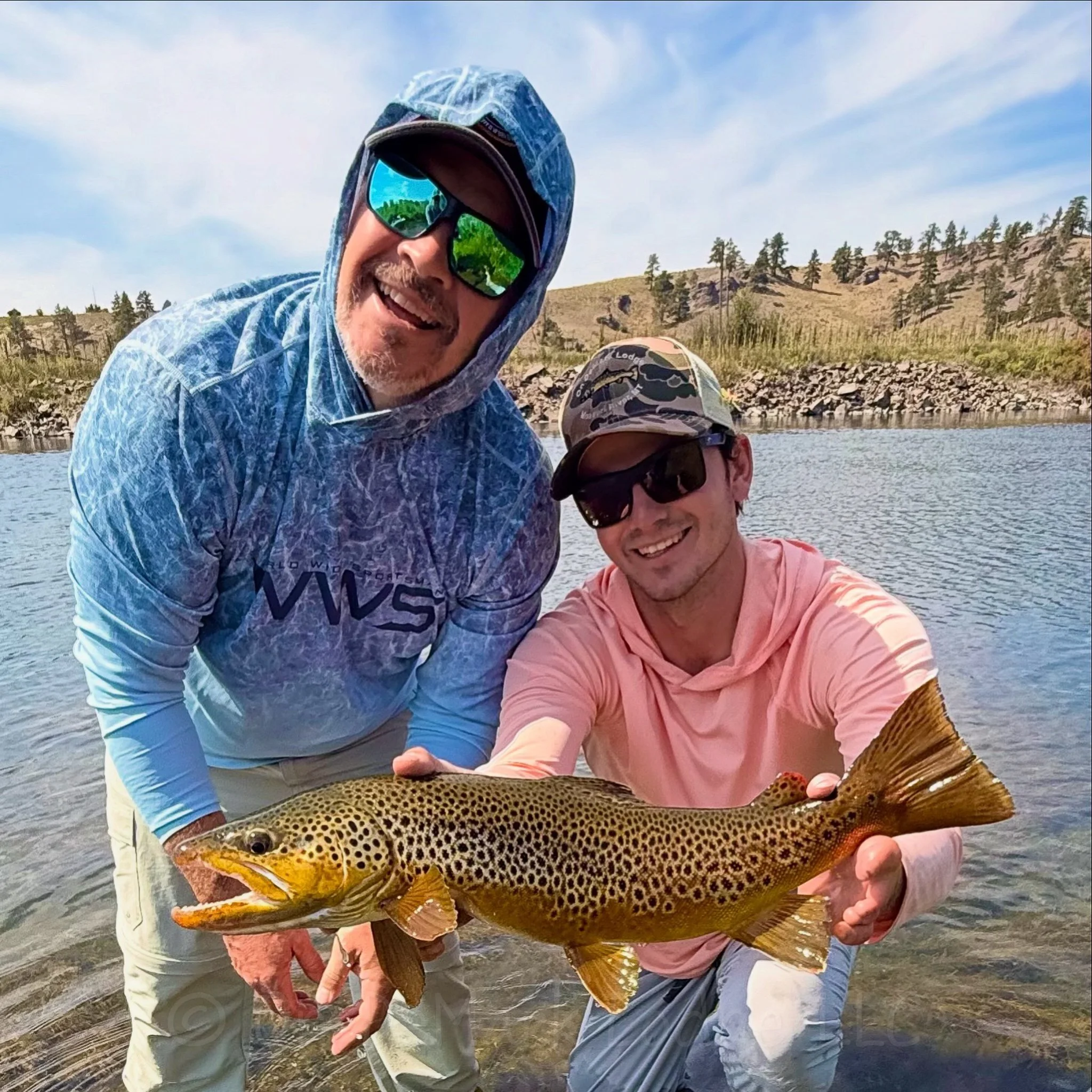
Shallow Nymph Stud
The shallow mayfly rigs work all season for bigger fish, but there’s some other presentations that work as well. Dead drifting a large streamer under an indicator works very effectively, as it imitates some common easy meals for these fish. Some leech patterns like a Thin Mint work well for this. Dead baitfish imitations like Zonkers work in certain stretches, as well as crayfish imitations. When fishing crayfish under an indicator, a good trick is to mend hyper aggressively or drag the flies on purpose. Sometimes a little action entices the bigger fish to move on your fly.
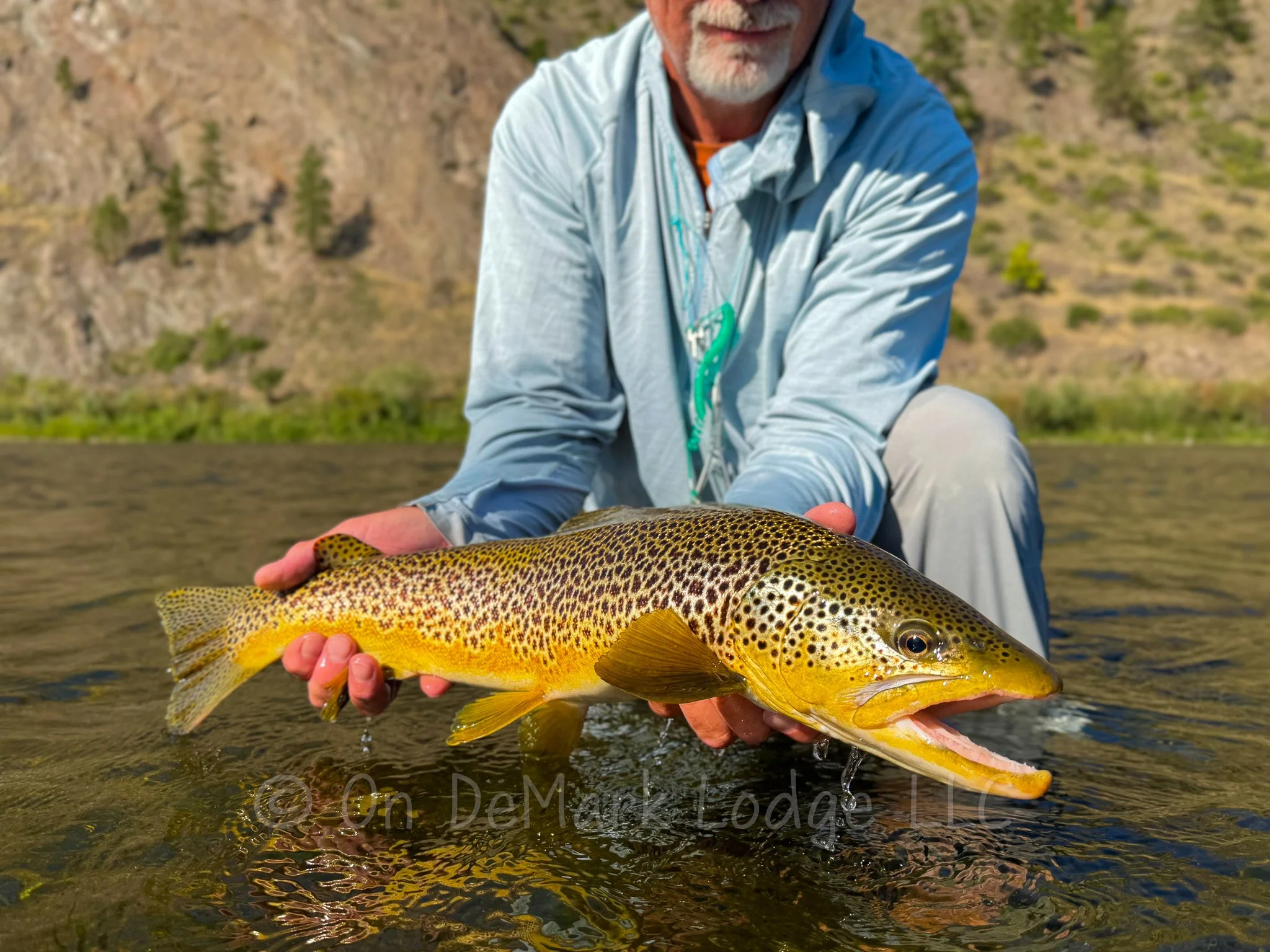
A Crayfish Cruncher
Giant Browns are in the river all year long. They don’t go on vacation. These fish can seem out of reach, but there is only one way for a fish to get of considerable size, and that is by eating. Big fish consume more calories than the little guys, so they are always a cast away. Sometimes, it is well worth it to exchange quantity for quality, and start searching for your first Missouri River Giant. We’ll help you search for one when you get here!